Sergentzion
Binkılıç, İstanbul

Sergentzion (modern Binkılıç) was the site of a bishopric and fortress in Eastern Thrace (Çatalca/Istanbul Province). The modern town is north of the Binkılıç Stream (historically known as İstranca/Strantza Stream). The name of the nearby hills, the Istranca/Strandja Mountains, is also the old name of this town and the nearby stream.
Sergentzion had a locally strategic position in Eastern Thrace. It was a heavily fortified town and the first bishopric located outside the Long Walls of Thrace. It was located on a road that ran along the southern side of the Istranca Mountains north of the Via Militaris. This road perhaps forked at Sergentzion, with one road leading northeast along the Black Sea and another passing southeast, connecting to the northern branch of the Via Egnatia. It was located around 15 km west of the Long Wall of Thrace. The traces of the Long Aqueduct system that once brought water to Constantinople ran around 2 km south of the town.
The bishopric of Sergentzion is first documented in 879 during the Synod of Constantinople, which reinstated Patriarch Photios. In the 10th century, the bishopric was subordinate to the metropolis of Herakleia.
Sergentzion appears several times in the history written by John VI Kantakouzenos. In 1322, Sergentzion was captured by the treacherous Byzantine general Syrgiannes during the civil war between Andronikos II and Andronikos III. During the Byzantine war with the Genoese in 1348, John VI Kantakouzenos ordered timber to be brought from the mountains near Sergentzion to build ships in Constantinople. It was probably captured by the Ottomans shortly before the conquest of Constantinople in 1453. In the early 20th century, it was a predominantly Greek town with around 6,000 inhabitants. During this period, a church dedicated to St. George stood on the site of the town mosque. Other churches in the village included churches dedicated to the Prophet Elijah, Saints Constantine and Helena, the Dormition (Koimesis) of the Virgin, and the Transfiguration (Metamorphosis) of Christ.
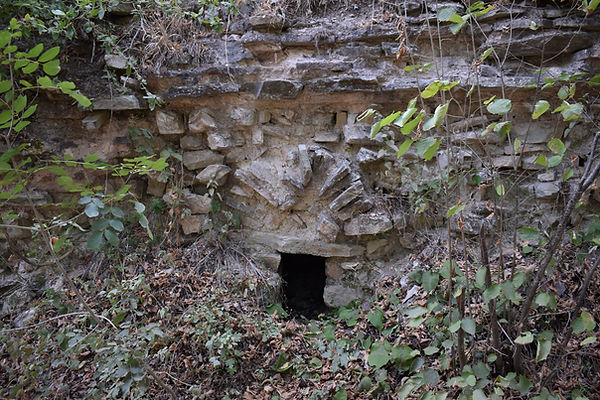
The remains of the fortress are on a high plateau around 1.5 km north of the village. It had commanding views to the east, south, and west. The fortifications were roughly rectangular in plan, measuring approximately 120 m by 40 m. Its masonry, which varies considerably, includes the use of rubble stone, bricks, or carefully hewn limestone blocks. The eastern wall is the best preserved. It has a series of drainage holes at regular intervals.



From The History of John VI Kantakouzenos
Nevertheless, since he thought that it was best to prepare for war, he commanded the Byzantines to contribute and placed Constantine Tarchaneiotes in charge of the collection while he turned his attention to preparing galleys. Since the Galatans held the sea and it was most difficult to import wood by sea fit for ship building, he commanded the Byzantines to bring the wood in by oxen and mule from the mountains opposite Sergentzion. The wood was brought in with a great deal of difficulty and hard work and the galleys were constructed at the docks in the Heptaskalon.


References
Külzer, A. Ostthrakien (Eurōpē), (Tabula Imperii Byzantini 12)
Preiser-Kapeller, J. “Heptaskalon and Other Selected Moorings on the Golden Horn,” (The Byzantine Harbours of Constantinople)
Crow, J., Bardill, J. and Bayliss, R. The Water Supply of Byzantine Constantinople
Primary Sources
Cassidy, N. (trans) A Translation and Historical Commentary of Book One and Book Two of the Historia of Georgios Pachymerēs (MA thesis)
Resources
Sergentzion/Binkılıç Album (Byzantine Legacy Flickr)

