
Basilica of Santa Croce in Gerusalemme (Rome)
Basilica di Santa Croce in Gerusalemme

The Basilica of Santa Croce in Gerusalemme is a fourth-century church in Rome. It consists of a hall from the Sessorium palace complex that was converted into a basilica. The remains of the palace, along with the Circus Varianus and the Amphitheatrum Castrense, are also next to the church. They are located within the eastern limits of the Aurelian Wall.
Dedicated to the Holy Cross, it has a reliquary chapel within the basilica complex. According to tradition, Helena established a basilica at the complex, though in reality, she probably built a palace chapel. One of the palace's large halls was probably converted into a basilica by Constantine. The church was restored in the eighth and twelfth centuries and extensively remodeled in the eighteenth century. The Chapel of St. Helena was reportedly built upon soil that St. Helen brought back from Jerusalem. A statue base discovered on the site is on display in the chapel. A second chapel was built in 1930 to house the relics of the Holy Cross.
The Sessorium was a vast palatial complex adjacent to the Amphitheatrum Castrense and Circus Varianus. Its origins are uncertain, though it probably became an imperial residence by the time of Elagabalus. Around the beginning of the fourth century, it was the residence of Helena, the mother of Constantine. Arches of the hall can be seen on the north side of the church. North of the church are remains of another hall of this palace, which consists of a vast apse. The nearby Thermae Helenae was probably named after Helena after she restored it. While substantial remains survived up to the sixteenth century, only the ruins of the adjacent cistern can be seen today. The Amphitheatrum Castrense was incorporated into the Aurelian Wall.

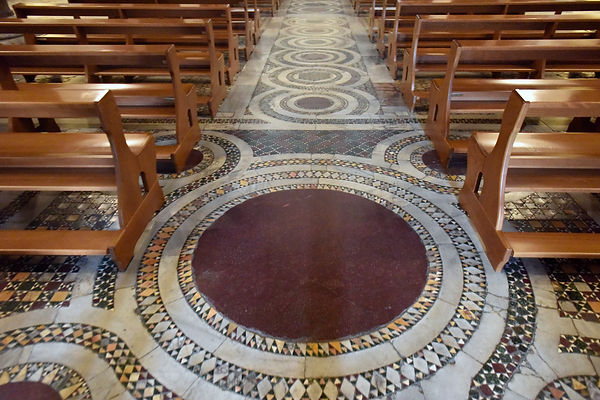
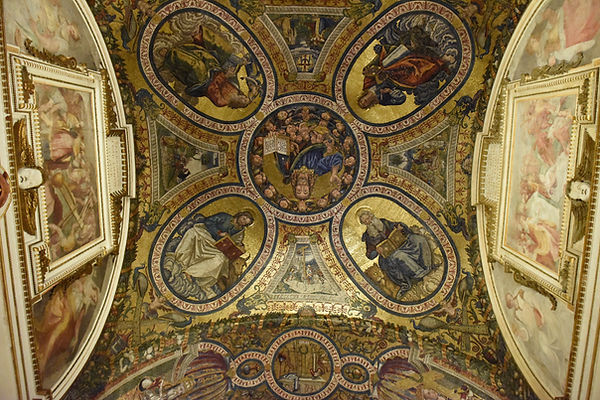

Relics
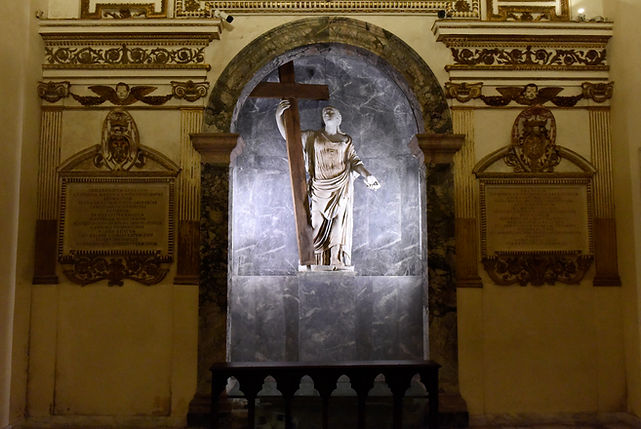
Statue of St. Helena

Inscription of statue base
Dominae nostrae Fl(aviae) Iui(iae) (sic) / Helenae, piissimae Aug(ustae), / genetrici d(omini) n(ostri) Constan/tini maximi, victoris, / clementissimi, semper / Augusti, aviae Constan/tini et Constanti beatis/simorum ac florentis/simorum Caesarum. / Iulius Maximilianus, v(ir) c(larissimus), comes, / pietati eius semper dicatis.
To our venerable mistress Flavia Iulia Helena, most pious Augusta, mother of our Lord Constantine the greatest, most merciful conqueror, forever Augustus, grandmother of Constantine (II) and Constantius (II), most blessed and flourishing Caesars. Iulius Maximilianus, of clarissimus rank, count, forever dedicated to her piety (set this up).

Remains of a hall of the Sessorium

Remains of a hall of the Sessorium

Amphitheatrum Castrense

Cistern of the Thermae Helenae

“The Seven Churches of Rome”
From Speculum Romanae Magnificentiae (1575) MET

Hendrick van Cleve or Pieter Vlerick (1556-1561)

Etienne Du Pérac (1621)

Cassiano dal Pozzo (1588-1657)


Girolamo Franzini (1588)

Friedrich Bernhard Werner (1690–1778)

Giovanni Maggi (c. 1610-1650)

Giovanni Battista Piranesi (1720-1778)

Friedrich Loos (c. 1848)
,_by_Arthur_John_Strutt.jpg)
Arthur John Strutt (1848)


References
Richardson, L. A New Topographical Dictionary of Ancient Rome
Statue Base of Empress Helena (Oxford Last Statues of Antiquity)
Reources

